
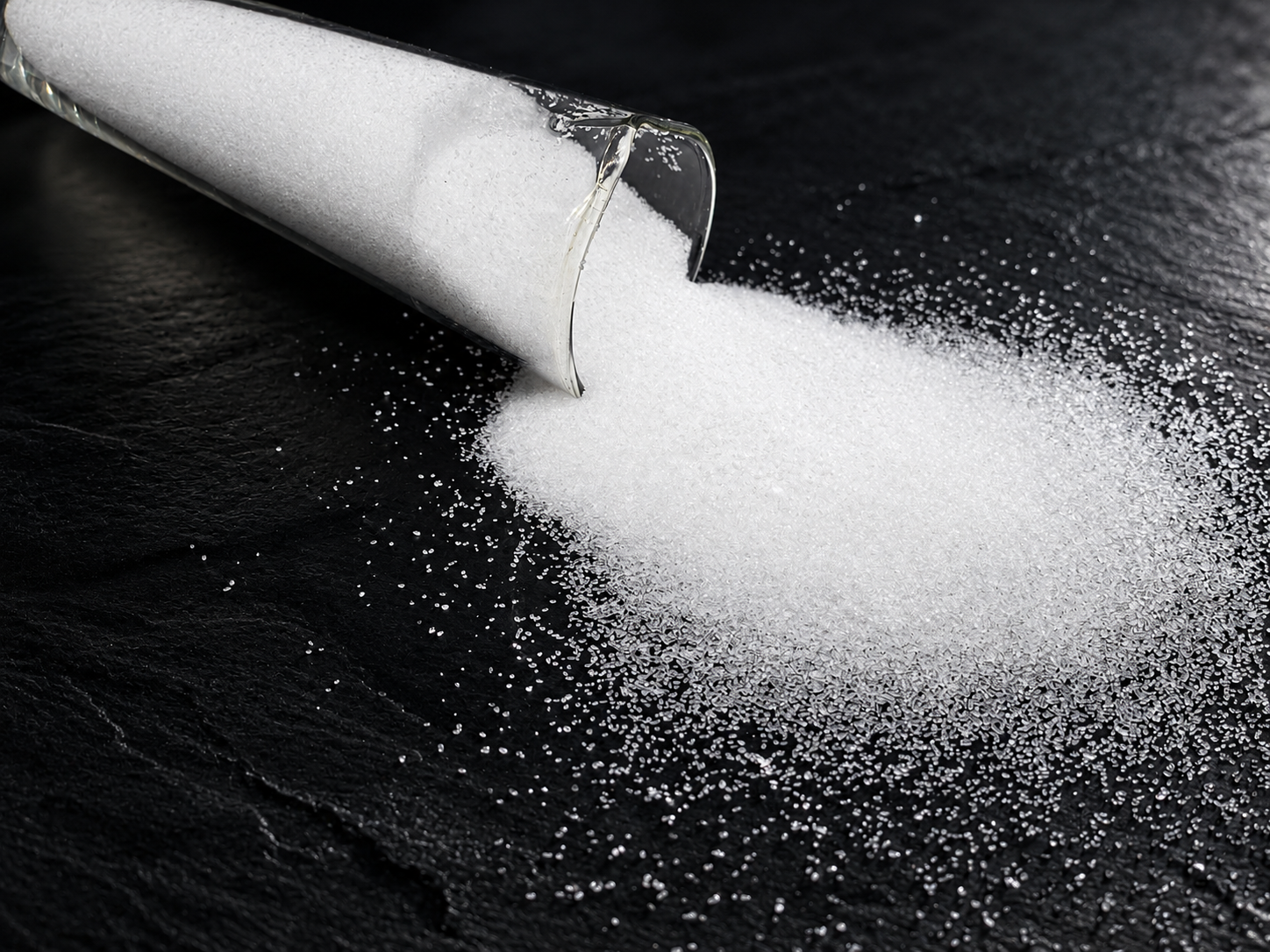
99.5% industrial grade crystalline potassium nitrate: a clarifying agent and oxidizer for glass and other industrial uses
In high-end glass manufacturing, raw-material purity directly decides product quality and value. Our 99.5% industrial grade crystalline potassium nitrate offers high purity and stable chemistry, and works as both a clarifying agent and an oxidizer. In the glass melt it helps remove tiny bubbles and impurities, improving light transmittance and clarity, which makes it a suitable choice for crystal glass, optical glass and ultra-clear glass. It is also used as an industrial oxidizer in other sectors, including regulated pyrotechnic manufacturing.
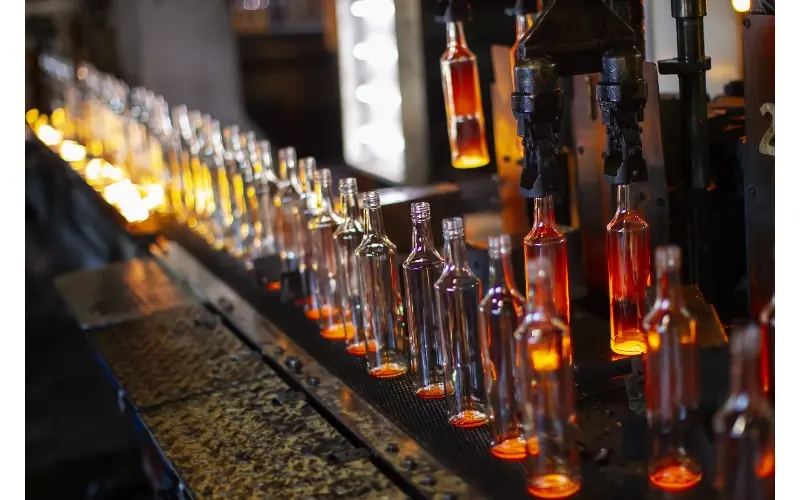
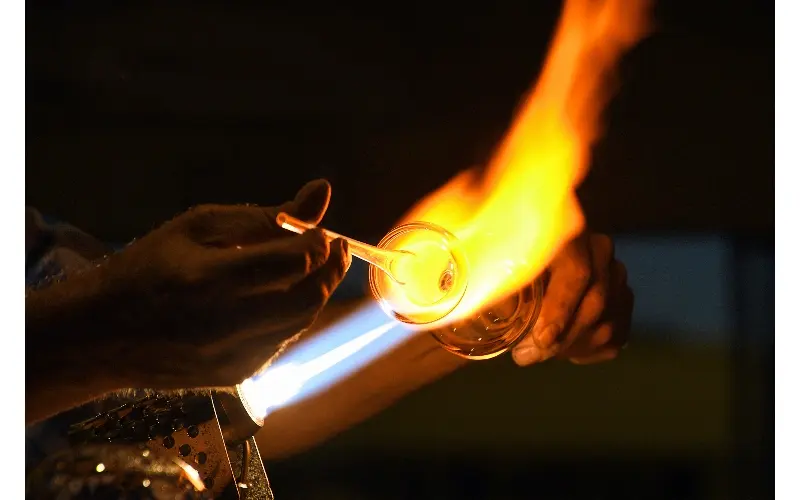
The core role of potassium nitrate in glass manufacturing
- Clarifying agent: it releases oxygen at melt temperatures, which helps tiny bubbles combine and escape from the glass melt and reduces bubble and seed defects.
- Oxidizer: it counters reducing substances in the batch (such as carbon and organic matter), helping to protect the furnace lining. It also stabilizes variable-valence elements such as iron, limiting the blue-green tint from Fe²⁺ and improving whiteness and transmittance.
- Support for decolorizing: it helps build a clean glass base, a good starting point for later colouring or decolorizing steps.
Our core product advantages
Purity that protects glass quality
KNO₃ content ≥ 99.5%. Impurity ions such as iron and chromium are kept low at the source, which keeps the melt clean and gives higher light transmittance and better colour consistency.
Controlled particle size for efficient mixing
The fine crystalline product has a controlled particle size distribution, so it mixes quickly and evenly in the glass batch and makes full contact with raw materials such as silica. This supports faster melting and a better clarifying effect.
Strict control of colouring impurities
Colouring ions are tightly limited: iron (Fe) ≤ 10 ppm and chromium (Cr) ≤ 2 ppm. This suits ultra-clear glass, optical glass and crystal glass with strict colour requirements.
Predictable thermal behaviour
It melts at about 334 °C and releases oxygen consistently at glass-melting temperatures, giving glassmakers a dependable process window and steadier batch-to-batch quality.
Technical parameters
| Item | Standard Indicator (%) | Test Result (%) |
|---|---|---|
| Potassium Nitrate (KNO₃) (dry basis) | ≥ 99.5 | 99.52 |
| Water (H₂O) | < 0.15 | 0.120 |
| Water Insolubles | ≤ 0.03 | 0.027 |
| Chloride ion (Cl⁻) | ≤ 0.02 | [fill in from COA] |
| Sulfate (SO₄²⁻) | ≤ 0.01 | 0.008 |
| Carbonate (CO₃²⁻) | ≤ 0.01 | – |
| Iron (Fe) | ≤ 0.001 | 0.00056 |
| Chromium (Cr) | ≤ 0.0002 | 0.000048 |
| Moisture Absorption Rate | < 0.25 | 0.21 |
Key applications
- Ultra-clear glass: very low iron is the key to higher transmittance and a crystal-like look.
- Optical and crystal glass: good clarifying ability helps keep the glass body free of bubbles and streaks, for demanding optical instruments and art glass.
- Bottle, jar and vessel glass: an efficient oxidizer and clarifying agent that improves melting efficiency and product appearance.
- Specialty glass: display glass substrates and photovoltaic glass, where high purity protects performance and yield.
- Pyrotechnics (licensed manufacturers): used as an industrial oxidizer. As a regulated material, supply for this use is subject to local licensing and export-control rules.

Packaging, Storage and Safety Instructions
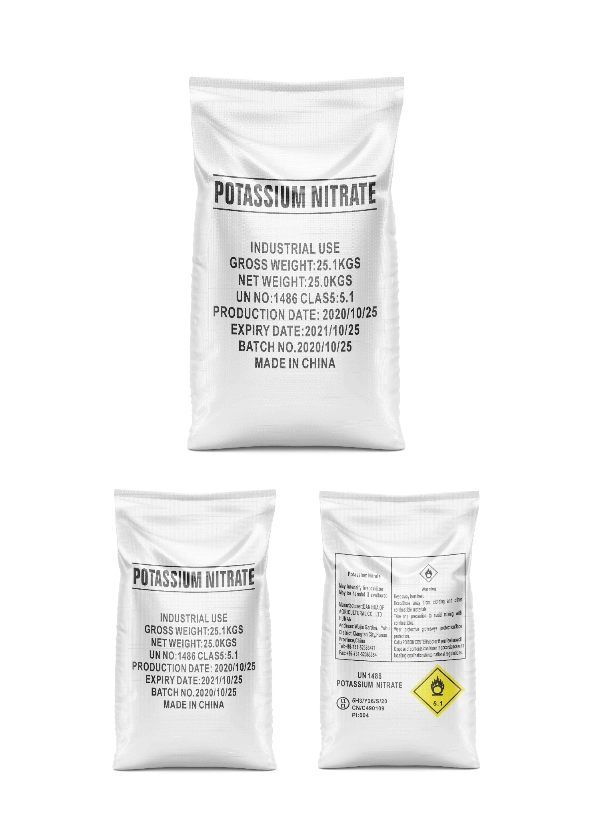
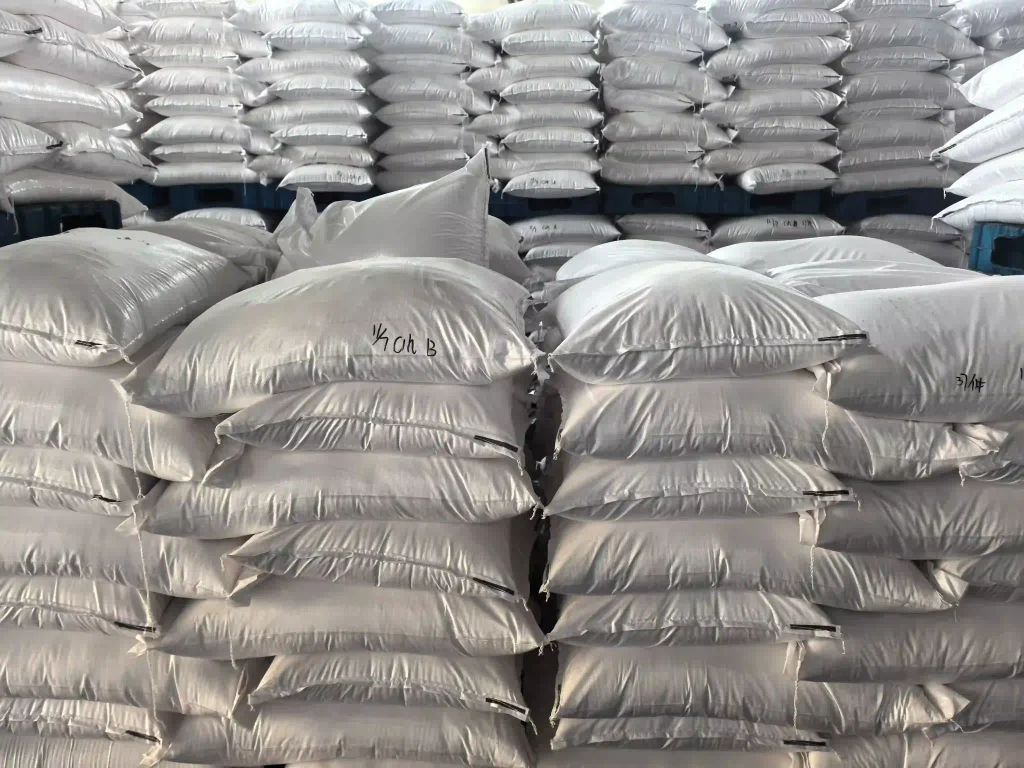
- Packaging: polyethylene film inner bag with a polypropylene woven outer bag; 25 kg, 50 kg or 1-ton net per bag, or customized on request.
- Storage: keep in a cool, dry place; warehouse temperature ≤ 30 °C and relative humidity ≤ 80%.
- Transport: UN 1486 (Class 5.1 oxidizer); sealed packaging; ship separately from combustible and reducing materials.
- Safe handling: keep away from ignition and heat sources, fuels and reducing substances.
FAQ
Q: Why does glass manufacturing need potassium nitrate with a purity as high as 99.5%?
A: Glass, especially ultra-clear and optical glass, is very sensitive to colouring ions such as iron and chromium. At 99.5% purity these impurities are held at ppm level, so they do not absorb light at particular wavelengths and tint the glass blue or green. This protects transmittance and clarity.
Q: How does this product differ from ordinary industrial-grade potassium nitrate in glass use?
A: The main difference is how strictly impurities are controlled. Ordinary industrial grade may be enough for general clarifying, but its higher iron content can affect whiteness and transmittance in high-end glass. This grade limits colouring and bubble-forming ions such as Fe, Cr and Cl⁻ more tightly.
Q: How does particle size affect the glass manufacturing process?
A: Particle size affects mixing uniformity and reaction rate. Coarse particles can mix unevenly and delay melting, while excessively fine material creates dust. Our controlled particle size gives fast, even dissolution in the melt while keeping handling safe, so the clarifying effect stays stable.
Q: Is this grade used outside glass, and what documents are needed?
A: Yes. It is also used as an industrial oxidizer, including by licensed pyrotechnic manufacturers. Potassium nitrate is a regulated material in many countries, so we may ask for your business licence and end-use details, and we ship in line with UN 1486 transport rules.
Q: How do I keep potassium nitrate dry in storage?
A: Use moisture-proof packaging, keep the bag sealed after opening, and control warehouse humidity (relative humidity ≤ 80%).
Pursue the highest clarity by starting with high-purity raw materials!
Experience the difference 99.5% potassium nitrate can make to your glass products. Contact our technical sales team to request samples and detailed technical data, and our application engineers will support you.